
Our Verdict
Choose the Solo for recording one vocal microphone and a guitar, or for building tracks one part at a time. Choose the 2i2 for two microphones, a stereo line source, or automatic help with recording levels. The Solo covers a focused setup; the 2i2 leaves more room for different recording sessions.
Focusrite Scarlett Solo 4th Gen vs Scarlett 2i2 4th Gen (2026) Head to Head
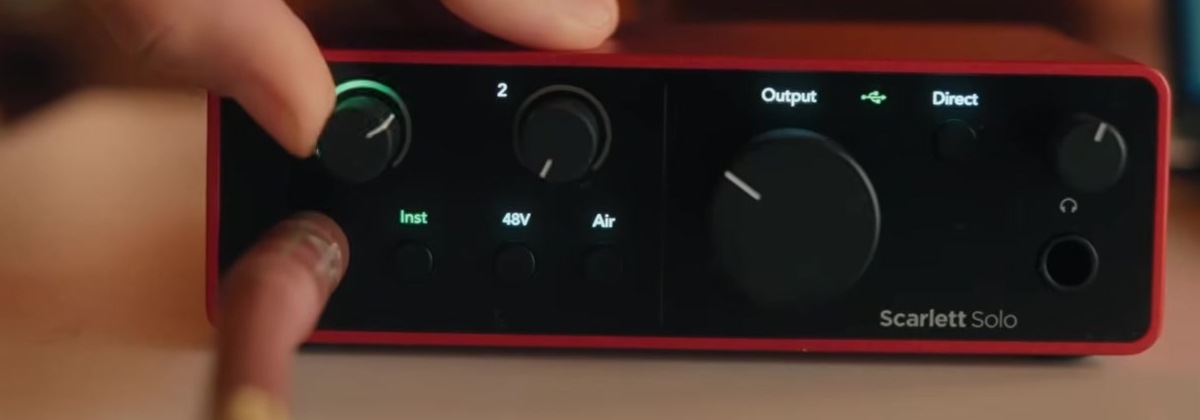
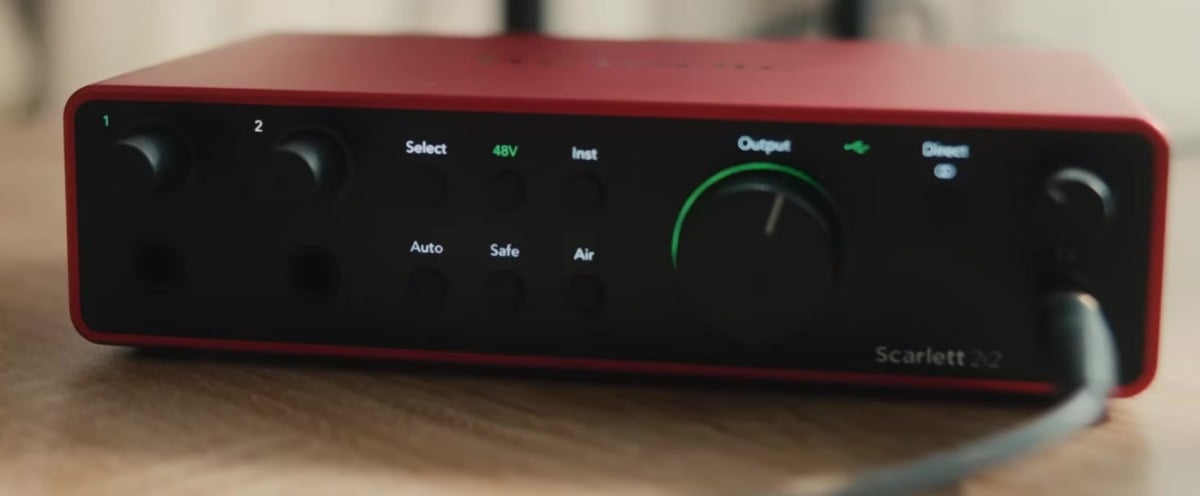
The Scarlett Solo and Scarlett 2i2 4th Generation are compact interfaces for recording at home. Both offer two recording channels, but the Solo has one microphone input and one line/instrument input. The 2i2 offers two microphone preamps and more flexible source combinations. That distinction matters more than the similar names when planning your sessions.
Key Differences
| Feature | Focusrite Scarlett Solo 4th Generation | Focusrite Scarlett 2i2 4th Generation |
|---|---|---|
| Microphone preamp count | 1 | 2 |
| Maximum microphone gain | 57 dB | 69 dB |
| Automatic gain setting | No | Yes |
| Automatic clipping protection | No | Yes; up to 96 kHz |
| 48 V phantom-power control | Single microphone input | Shared switch for both microphone inputs |
| Front-panel metering | Gain halos; no output meter | Gain halos and output meter |
Source combinations: Two-input does not mean two-microphone. A two-person podcast or a pair of microphones on acoustic guitar needs the 2i2. A singer recording a microphone and a guitar pickup together can use the Solo. The 2i2 can also take the left and right outputs of a keyboard. Its rear XLR and front jack sockets share two channels; plugging into a front jack replaces that channel's microphone connection.
Gain and level control: The Solo provides 57 dB of microphone gain; the 2i2 offers 69 dB, Auto Gain and Clip Safe. Extra gain can help with quiet sources and low-output microphones. Auto Gain establishes a starting level; Clip Safe can reduce gain as an input approaches clipping. Neither excuses setting up the microphone and checking a test take. Clip Safe is available up to 96 kHz.
Metering: Both have illuminated gain indicators, while the 2i2 also adds output metering. Its extra controls are useful when recording yourself, especially when you cannot reach the computer easily during a take.
Key Features in Common
| Feature | Focusrite Scarlett Solo 4th Generation | Focusrite Scarlett 2i2 4th Generation |
|---|---|---|
| Simultaneous analog recording channels | 2 | 2 |
| Maximum bit depth | 24-bit | 24-bit |
| Maximum sample rate | 192 kHz | 192 kHz |
| Balanced line output channels | 2 | 2 |
| Headphone sockets | 1 | 1 |
| 5-pin MIDI | None | None |
| Input voicing | Presence; Presence + Harmonic Drive (up to 96 kHz) | Presence; Presence + Harmonic Drive (up to 96 kHz) |
| Digital expansion | None | None |
| Computer connection | USB-C connector; USB 2.0 protocol | USB-C connector; USB 2.0 protocol |
Both support up to 24-bit/192 kHz audio, provide balanced stereo monitor outputs and one headphone socket, and offer direct monitoring and loopback. Neither includes MIDI sockets or ADAT expansion. Both have Air voicing, with Presence and Presence plus Harmonic Drive; the combined mode is available up to 96 kHz. Their USB-C connector carries USB 2.0 audio.
For overdubbing, either can form the centre of a small recording setup. The shared recording format does not make their input arrangements interchangeable: count the microphones and line sources you need simultaneously before choosing.
Practical Buying Considerations
Monitoring: Direct monitoring helps you hear an input without waiting for the DAW. Listening through amp simulators or software effects requires monitoring through the computer, where the driver and buffer settings affect the delay.
Accessories and software: Plan for suitable microphone, instrument and speaker cables. Both use Focusrite Control 2 and include software offers that require registration; confirm the current bundle and operating-system support for your computer. Neither has a second headphone socket for a guest.
Future sessions: Think about the recording you want to make next, not just your first vocal take. If two microphones or a stereo keyboard are likely, the 2i2's flexibility is useful from the outset.
Full Specifications
Comparison essentials
| Feature | Focusrite Scarlett Solo 4th Generation | Focusrite Scarlett 2i2 4th Generation |
|---|---|---|
| Simultaneous analog recording channels | 2 | 2 |
| Microphone preamp count | 1 | 2 |
| Maximum microphone gain | 57 dB | 69 dB |
| Maximum bit depth | 24-bit | 24-bit |
| Maximum sample rate | 192 kHz | 192 kHz |
| Balanced line output channels | 2 | 2 |
| Headphone sockets | 1 | 1 |
| 5-pin MIDI | None | None |
| Automatic gain setting | No | Yes |
| Automatic clipping protection | No | Yes; up to 96 kHz |
| Input voicing | Presence; Presence + Harmonic Drive (up to 96 kHz) | Presence; Presence + Harmonic Drive (up to 96 kHz) |
| 48 V phantom-power control | Single microphone input | Shared switch for both microphone inputs |
| Front-panel metering | Gain halos; no output meter | Gain halos and output meter |
Recording capacity
| Feature | Focusrite Scarlett Solo 4th Generation | Focusrite Scarlett 2i2 4th Generation |
|---|---|---|
| Microphone preamps | 1 microphone preamp; 57 dB gain; 48V phantom power | 2 microphone preamps; 69 dB gain; shared 48V switch |
| Analog inputs | 2 channels: 1 XLR microphone and 1 line/instrument jack | 2 channels: 2 rear XLR and 2 front line/instrument jacks sharing those channels |
| Analog outputs | 2 balanced TRS line outputs | 2 balanced TRS line outputs |
| Headphone outputs | 1 stereo 6.35 mm jack; separate volume | 1 stereo 6.35 mm jack; separate volume |
| Digital expansion | None | None |
Connection and monitoring
| Feature | Focusrite Scarlett Solo 4th Generation | Focusrite Scarlett 2i2 4th Generation |
|---|---|---|
| Computer connection | USB-C connector; USB 2.0 protocol | USB-C connector; USB 2.0 protocol |
| Computer compatibility | Windows and macOS; check current OS compatibility | Windows and macOS; check current OS compatibility |
| Power supply | USB bus power; 900 mA | USB bus power; 900 mA; optional separate USB-C 5V power |
| Direct monitoring | Direct Monitor button; software mix adjustment | Front button selects mono/stereo; Focusrite Control 2 adjusts mix |
| Loopback | Stereo loopback | Stereo loopback |
| Onboard DSP | Air voicing; no onboard plug-in effects engine | Air Presence/Harmonic Drive; Auto Gain; Clip Safe; no onboard plug-in hosting |
Software and portability
| Feature | Focusrite Scarlett Solo 4th Generation | Focusrite Scarlett 2i2 4th Generation |
|---|---|---|
| Included software | Focusrite Control 2; Hitmaker Expansion bundle; registration required | Focusrite Control 2; Hitmaker Expansion bundle; registration required |
| Dimensions | 143 x 96 x 46.5 mm (W x D x H) | 180 x 117 x 47.5 mm (W x D x H) |
| Weight | 0.382 kg | 0.595 kg |
Verdict
The Solo is a sensible fit for a single-microphone workflow with a separate guitar or instrument input. The 2i2 earns its place when you need two flexible input channels, more microphone gain or automatic level tools. Choose around simultaneous sources and monitoring needs; both can handle everyday home recording.