
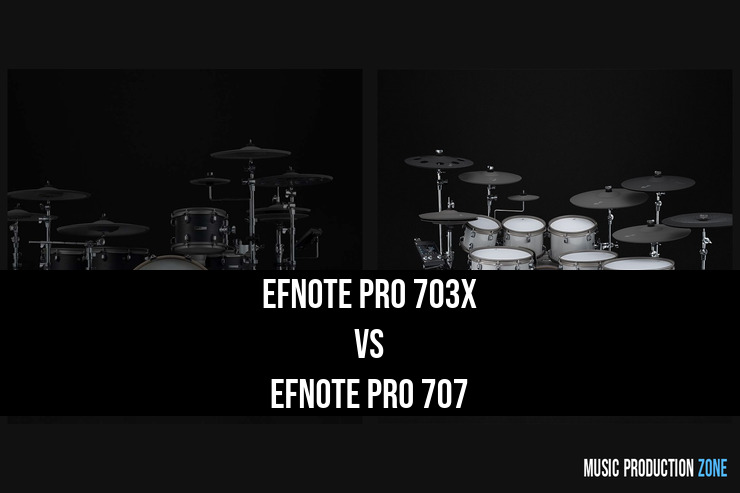
The Pro 703X is the more sensible choice if three toms and seven cymbal positions cover your playing. It retains the 707's sounds, hi-hat system, touchscreen controls and twelve XLR buses, with room for three compatible pad additions. Choose the Pro 707 when you specifically want its five-tom spread and separate china position from the start. There is no module upgrade to justify buying more hardware than you need.
EFNOTE Pro 703X vs EFNOTE Pro 707 (2026) Head to Head


The EFNOTE Pro 703X and Pro 707 use the same EFD-PRO sound module, 20-inch kick, 14-inch snare and optical hi-hat. Moving to the 707 buys a larger physical kit: five toms instead of three, plus an additional china cymbal. It does not buy a higher-tier sound engine or more recording channels.
The 703X is arranged around one rack tom and two floor toms, with a dark shell finish. The white-sparkle 707 adds more rack-tom positions and fills all of the module's pad inputs. Choose around the layout you actually want to play and the space available for it.
Key Differences
The 703X has a 10-inch rack tom and 13- and 15-inch floor toms. The 707 retains those sizes and adds 8- and 11-inch rack toms, producing an 8-, 10-, 11-, 13- and 15-inch spread. That gives you two more physical notes across a fill without reassigning sounds to existing pads.
Both include three crashes: a 16-inch EFD-C16, an 18-inch EFD-C18 and an 18-inch EFD-C18-D. Both also have a 20-inch ride, 17-inch effects cymbal, 8-inch splash and 14-inch hi-hat. The 707 adds an 18-inch EFD-C18CH china. The difference is therefore one extra cymbal position, rather than a wholesale change to the cymbal set.
The extra 8-inch tom, 11-inch tom and china use the three pad inputs left open by the 703X configuration. The 707 uses all fifteen inputs. The 703X can grow later with compatible EFNOTE components, but adding pads also means finding mounts, stand space and cables for them.
The 703X has a Black Oak-ish finish and the 707 has White Sparkle shells. Finish is a legitimate choice for a stage or video setup, but it does not change their shared module capabilities. The 707's extra rack toms also put more hardware across the front of the kit, whereas the 703X leaves a simpler one-up, two-down drum layout.
Key Features in Common
Both kits use the EFD-K2015 20-by-15-inch kick and EFD-S1455 14-by-5.5-inch snare. Their birch shells have mesh heads. The snare supports head, rim and side articulations, and the toms provide head and rim zones. The larger 707 does not give you a different snare or kick triggering system.
Both use the EFD-H14 14-inch optical hi-hat on a conventional hi-hat stand, with bow, edge and bell sounds. Both provide multi-zone cymbals and choke control. The hi-hat uses EFNOTE's dedicated cable, while the other pads connect individually to the floor unit.
Their EFD-PRO modules have a full-colour touchscreen control surface, 23 editable factory kits and 100 user kits. Both provide the same tuning, muffling, layering, metronome and set-list functions. Either runs as a standalone electronic kit and can receive Bluetooth backing tracks without a computer.
Both the EFNOTE Pro 703X and EFNOTE Pro 707 are equipped with the same drum module (the EFD-PRO), so your choice between the two e-drum sets will be based on your preferences between the drum pads, cymbals pads, and hardware on the separate kits.
The recording and PA connections are identical. Both provide twelve balanced XLR bus outputs, a stereo line output and monitor-return inputs. The buses let a house engineer receive separate drum groups while the drummer maintains a useful headphone mix. A small venue can use a stereo feed instead of taking all twelve buses.
USB audio sends twelve channels to a computer and accepts a stereo return. Both also send USB MIDI, offer Bluetooth MIDI and have a five-pin MIDI output. The 707's extra pads do not add USB channels: you still decide how fifteen pad positions feed twelve audio buses. Record MIDI alongside audio if you want the option to change the performance's sounds later.
The internal recorder stores performance data across fifteen tracks. It is useful for replaying a part and checking the kit from the listening position, but it is not a standalone WAV recorder. Use a computer or an external audio recorder when you need an audio file of the module's output.
Both support the same firmware features. Version 2 adds User Tones and Instrument Expansions through EFNOTE Desktop Tools, with these sound additions available for kick, snare and toms. Check the installed firmware before relying on them. Buying the 707 does not unlock a separate software tier.
Start with your normal playing position when planning space. The 703X's floor toms and full-size cymbals still need a substantial area, despite having fewer drums than the 707. Leave room for the throne, hi-hat travel and reaching the floor unit. Foldable stands help with transport, but these are full-size shells rather than a small practice rack.
Check the exact hardware package before ordering. Snare, tom and cymbal stands may be supplied as a retailer stand pack; a product photo alone does not establish what is included. Allow for a separate kick pedal, hi-hat stand, throne and headphones or amplification. For an existing EFNOTE owner, compare the cost and practical fit of individual compatible additions with replacing the whole kit.
Price Comparison Between The EFNOTE Pro 703X and EFNOTE Pro 707
Use the below to get up-to-date prices for both the EFNOTE Pro 703X and EFNOTE Pro 707
Hi-Hat
Cymbal Pads
Toms
Drum Module
Snare
Kick
Verdict
Buy the Pro 703X if you want EFNOTE's full stage-routing system with a three-tom layout and room to add pads later. Buy the Pro 707 if you already know you want five toms, a china and the complete fifteen-input configuration. Sound quality and recording connections do not form a separate upgrade step between them.
For a different approach to full-size electronic drums, see EFNOTE Pro 707 vs Roland VAD716, which compares EFNOTE's optical hi-hat and stage box with Roland's digital pads and V71 module.

Matt Taylor