
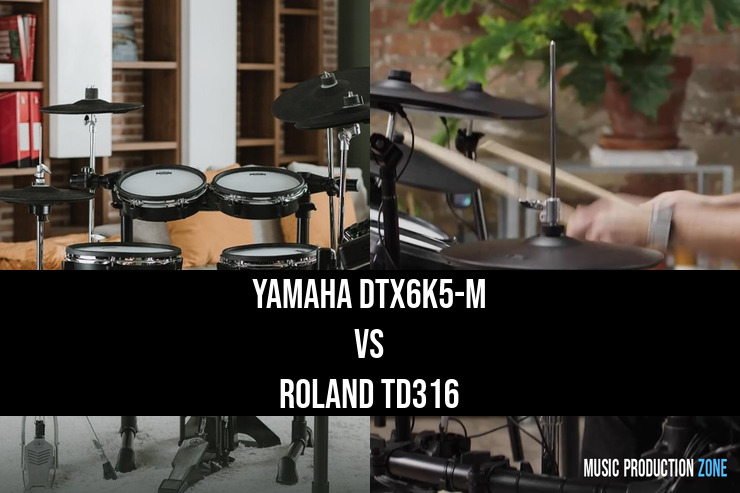
Choose the DTX6K5-M for its three 10-inch toms, larger cymbal targets and included hi-hat stand. Choose the TD316 for the V31's multichannel USB audio and single digital-pad upgrade input. Yamaha's stereo USB recording is enough for a finished drum mix; Roland gives you more control over individual drum tracks after recording.
Yamaha DTX6K5-M vs Roland TD316 (2026) Head to Head


The Yamaha DTX6K5-M makes sense for a drummer who wants three equally sized mesh toms, an included hi-hat stand and quick sound changes from the DTX-PRO's knobs. The Roland TD316 is the better choice for recording separate drum audio tracks directly over USB, or for adding one of Roland's digital pads later.
Both have a 12-inch mesh snare, three toms and two crashes. The differences are in the tom sizes, cymbal triggering, supplied hardware and how the module fits into your practice or recording setup.
Key Differences
Yamaha supplies a 12-inch XP120L-M snare and three 10-inch XP100L-M toms, all with tension-adjustable Remo two-ply mesh heads. Roland pairs its 12-inch PD-12P snare with two 8-inch PD-8H toms and a 10-inch PD-10H. The Yamaha layout gives every tom the same playing diameter, while the Roland arrangement has smaller rack toms. Both snares separate head and rim strikes, and the PD-12P uses three piezo sensors; sensor count is not the same as the number of playable zones.
The DTX6K5-M has a 13-inch RHH135 hi-hat, two 13-inch PCY135 crashes and a 15-inch PCY155 ride. The TD316 uses a 12-inch VH-10 hi-hat, two 12-inch CY-12C-T crashes and a 14-inch CY-14R-T ride. Yamaha's crashes provide bell, bow and edge sounds. The supplied Roland crashes use bow and edge triggering, with bell triggering on the ride. The Yamaha cymbals are therefore more than a size change if you use crash-bell accents.
Both hi-hats mount on a conventional hi-hat stand and respond to pedal movement, but Yamaha includes the HS650A stand. Roland requires a separately purchased hi-hat stand. Yamaha's snare mounts on the supplied rack arm; the TD316's PD-12P requires a separate snare stand. These hardware differences matter when comparing the complete setup you will actually need.
The Yamaha KP90 kick tower has a 7.5-inch rubber surface with cushioning beneath it. Roland's KD-10 has a 5-inch playing surface with a fabric covering. Both work with double kick pedals. The larger Yamaha target gives you a different physical surface, though its diameter alone does not establish better response or lower noise.
The Yamaha DTX6K5-M is equipped with the DTX-PRO, while the Roland TD316 uses the V31.
Key Features in Common
Both are standalone electronic kits: the DTX-PRO and V31 produce their onboard sounds without a computer. Both let you adjust the mesh heads, assign sounds to head and rim zones, choke the crash cymbals and play a three-zone ride. Neither kit includes a digital snare, ride or hi-hat.
Both modules have training tools, a metronome, sample import and onboard recording. They also provide USB MIDI and a five-pin MIDI output for external instruments. Each has stereo main outputs and a headphone connection. Neither supplies dedicated analog direct outputs for sending every drum separately to a live mixer.
The recording choice is straightforward. The DTX-PRO sends stereo audio over USB, so you can capture its internal kit as a two-channel mix without an external audio interface. The V31 can send up to 30 audio channels to a DAW in vendor mode with Roland's driver. Its generic USB mode is stereo. Select the correct driver and mode before a session if you expect separate kick, snare and cymbal tracks.
For quick sound changes, the DTX-PRO has dedicated Ambience, Comp and Effect knobs. The V31 uses a 4.3-inch colour display, EZ Edit controls and deeper menus, with a computer editor available. Listen to the particular kits you want to use: a bigger instrument count does not decide which acoustic drum sounds you will prefer.
The V31 supports Bluetooth backing-track audio; the DTX-PRO has no built-in Bluetooth. Yamaha's wired AUX input can receive music from a phone or player with an appropriate cable. Bluetooth audio on Roland is for feeding music into the module, so plan wired headphones or monitors for playing.
The V31 has one digital trigger input for a compatible Roland digital snare, ride or hi-hat. It cannot connect all three at once. Its second crash occupies the CRASH 2 socket, leaving the AUX/TOM 4 analog socket for expansion in the standard TD316 setup. Yamaha's expansion options depend on pad type and cabling; do not treat its maximum supported pad count as that many unused sockets.
Both need a kick pedal, throne and monitoring. Allow room for the pedals and seated position as well as the rack. On the Yamaha, select the DTX6K5-M trigger preset during setup; if it is absent, update the module firmware before configuring the pads. The DTX-PRO's expanded factory library is a version-2 feature, rather than a reason to assume every older module already has the same sounds.
Price Comparison Between The Yamaha DTX6K5-M and Roland TD316
Use the below to get up-to-date prices for both the Yamaha DTX6K5-M and Roland TD316
Hi-Hat
Cymbal Pads
Toms
Drum Module
Snare
Kick
Verdict
The DTX6K5-M is our choice when the larger tom and cymbal targets, supplied hi-hat hardware and direct Kit Modifier controls fit your practice routine. The TD316 earns the upgrade for a player who will use separate USB audio tracks or a compatible digital-pad addition.
If you are also considering Alesis, see Yamaha DTX6K5-M vs Alesis Strata Core. Our Roland TD313 vs TD316 comparison explains the hardware changes within the V31 range.

Matt Taylor